
This results in a time series of sellers where sellers are irregularly classified because of oscillations on each entity specific activity, such as having a less frequent number of transactions during a period. The result is a time series of lists of sellers and buyers for each period and for each market and the U2U network. Additionally, we analyse the U2U network of transactions, i.e., the transactions between pairs of market first-neighbors where the source and destination nodes are market users without the market as an intermediate.
The emergence of Bitcoin has revolutionized the way people perceive digital currency. Particularly in recent years, Bitcoin darknet markets have become a popular topic of discussion. These online platforms serve as marketplaces where users can trade a variety of goods and services, often operating outside the bounds of legality. Understanding how these markets function, the risks involved, and the implications for users is crucial for anyone interested in the intersection of cryptocurrency and the darker aspects of the internet.
Bitcoin Darknet Markets
Bitcoin darknet markets are online marketplaces that utilize cryptocurrency, primarily Bitcoin, to facilitate transactions. These markets enable users to buy and sell goods, ranging from legal products to illicit substances and other services. One of the key features of these marketplaces is the anonymity they provide, both for buyers and sellers. This anonymity is facilitated by the use of cryptocurrencies, which allows transactions to remain somewhat obscured from authorities and financial institutions.
The Role of Bitcoin in Darknet Markets
It has been considered a "proto-Silk Road" but the use of payment services such as PayPal and Western Union allowed law enforcement to trace payments and it was subsequently shut down by the FBI in 2012. A darknet market is a commercial website on the dark web that operates via darknets such as Tor and I2P. In that time, about a dozen new, more sophisticated markets were created, with better security and a more anarchistic philosophy driving them.
- Cracking down on illicit dark net services also has the potential to raise ethical and legal questions with regards to the boundaries of law enforcement.
- But beneath the surface of familiar websites lies a hidden world known as the dark web.
- We treat this estimate as a conservative baseline — a minimum, or “floor,” for illicit cryptocurrency activity.
- These entities include a broad range of threat categories, such as fraud schemes, sanctioned actors, terrorist organizations, and darknet marketplaces.
- We observe this concentration of trading volume in the probability density functions (PDFs) of the total money received by each seller and the total money sent by each buyer, as shown in Figs.
Bitcoin serves as a cornerstone in the operation of Bitcoin darknet markets. Its decentralized nature allows users to conduct transactions without the need for traditional banking institutions. This not only provides users with privacy but also makes it difficult for law enforcement agencies to track financial activities. The use of Bitcoin for transactions also allows for pseudonymous buying and selling, where users can operate under screen names rather than real identities.

Types of Goods and Services Available
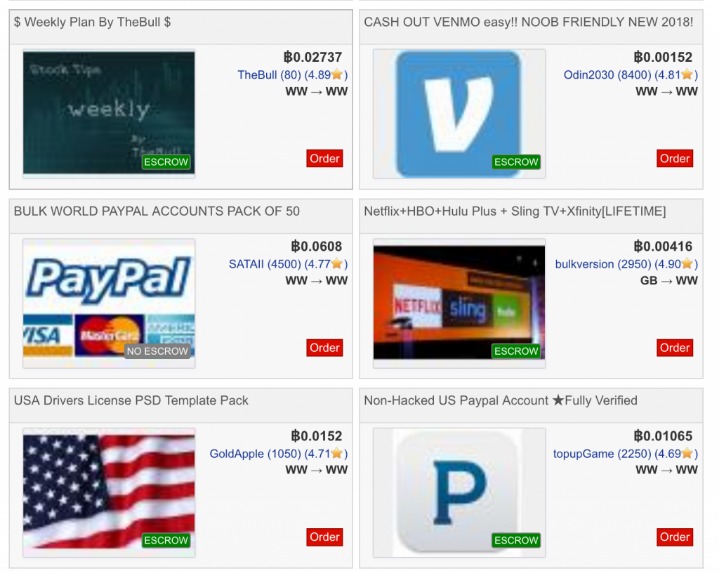
The range of goods and services offered on Bitcoin darknet markets is broad. While many markets are notorious for the sale of illegal drugs, other categories include counterfeit currency, hacking services, stolen data, and even weapons. However, it is important to note that not all transactions on these platforms are illegal. Some users may engage in the sale of legal items, such as digital art or privacy-oriented software, further complicating the landscape.
Risks and Consequences
Engaging with Bitcoin darknet markets can have severe consequences. The primary risk comes from legal repercussions; purchasing illegal goods can lead to criminal charges and significant legal penalties. Additionally, these markets can be rife with scams and fraudulent activities, leaving users vulnerable to losing their funds. Furthermore, the anonymity offered on these platforms does not guarantee safety. Law enforcement agencies are increasingly developing sophisticated means to monitor and infiltrate these markets.
Staying Informed and Safe
For those who wish to explore the world of Bitcoin darknet markets, it is imperative to stay informed about the potential risks and legalities involved. Being educated about how these markets operate, the typical threats present, and current laws regarding cryptocurrency can help individuals make informed choices. Utilizing cybersecurity best practices, such as using a VPN and ensuring secure wallets, can also mitigate some risks associated with engaging in these online platforms.
- This approach illustrates how blockchain intelligence can turn partial artifacts into comprehensive financial records.
- Evolution of buyers and sellers in the ecosystem of DWMs.
- A coordinated Spanish and EU-wide operation targeted an underground cash-to-crypto network serving primarily Russian-speaking and Asian organized crime clients.
- Crypto’s early links to darknet marketplaces and illicit activity also contribute to stories like these to gain traction.
- By September 2014, Agora was reported to be the largest market, avoiding Operation Onymous; as of April 2015update, Agora has gone on to be the largest overall marketplace, with more listings than the Silk Road at its height.
The Future of Bitcoin Darknet Markets
The evolution of Bitcoin and its specific role within Bitcoin darknet markets will be shaped by technological advancements, regulatory changes, and the behaviors of both users and law enforcement. As cryptocurrencies gain more mainstream acceptance, their use in illegal activities may come under increasing scrutiny. Understanding these dynamics is essential for anyone considering participation in these markets, whether for educational purposes or potential involvement.
In conclusion, Bitcoin darknet markets represent a complex intersection of technology, legality, and morality. Awareness of these markets and their implications is crucial for anyone looking to navigate the ever-changing landscape of digital currency and online transactions.